

An enterprise AI deployment strategy is a plan for rolling out AI where it supports clear business goals. For UK businesses that means choosing a high-value problem first, getting data and infrastructure ready, preparing people for the change, governing AI responsibly under UK GDPR, and measuring the return against a documented baseline before scaling.

Mastering enterprise AI deployment requires a comprehensive strategy that aligns with business goals, addresses implementation challenges, and fosters organisational adaptability.
- Strategic alignment: Connect AI initiatives directly to business objectives with measurable outcomes like increased revenue or improved operational efficiency.
- Infrastructure readiness: Build scalable technical foundations including advanced AI platforms and robust data ecosystems.
- Organisational adaptation: Foster a culture of innovation through upskilling programmes and clear change management.
- Implementation approach: Adopt iterative deployment methods with continuous refinement based on real-world feedback.
- ROI measurement: Establish clear metrics to demonstrate tangible business value and maintain stakeholder support.
- Long-term advantage: Create sustainable competitive edge through proprietary data assets and agile AI governance.
Introduction: The Transformative Potential of Enterprise AI
Enterprise artificial intelligence (AI) represents far more than just another technological innovation. It's a fundamental business transformation catalyst. When strategically deployed, AI becomes a powerful engine for reshaping processes, enhancing decision-making capabilities, and delivering measurable business outcomes that directly support organisational objectives.
Enterprise adoption is accelerating fast: Gartner predicts 40% of enterprise applications will include task-specific AI agents by 2026, up from less than 5% in 2025, reflecting the growing recognition of AI's business value. However, this journey comes with significant challenges: from navigating complex legacy system integration to establishing proper data governance frameworks and overcoming organisational resistance.
To truly capitalise on AI's transformative promise, UK enterprises must develop a well-structured strategy built on three pillars: robust technology foundations, a forward-looking culture of innovation, and scalable, iterative implementation processes.
This comprehensive guide explores the essential elements of successful enterprise AI deployment, providing actionable frameworks for aligning AI with business goals, transforming organisational capabilities, and implementing practical solutions for both technical and operational challenges.
|
40%
of enterprise applications expected to include task-specific AI agents by 2026 (Gartner)
|
$12.9m
the minimum annual cost of poor data quality to an organisation, according to Gartner
|
10-15%
the revenue lift personalisation most often drives, according to McKinsey
|
Aligning AI Strategy with Business Goals
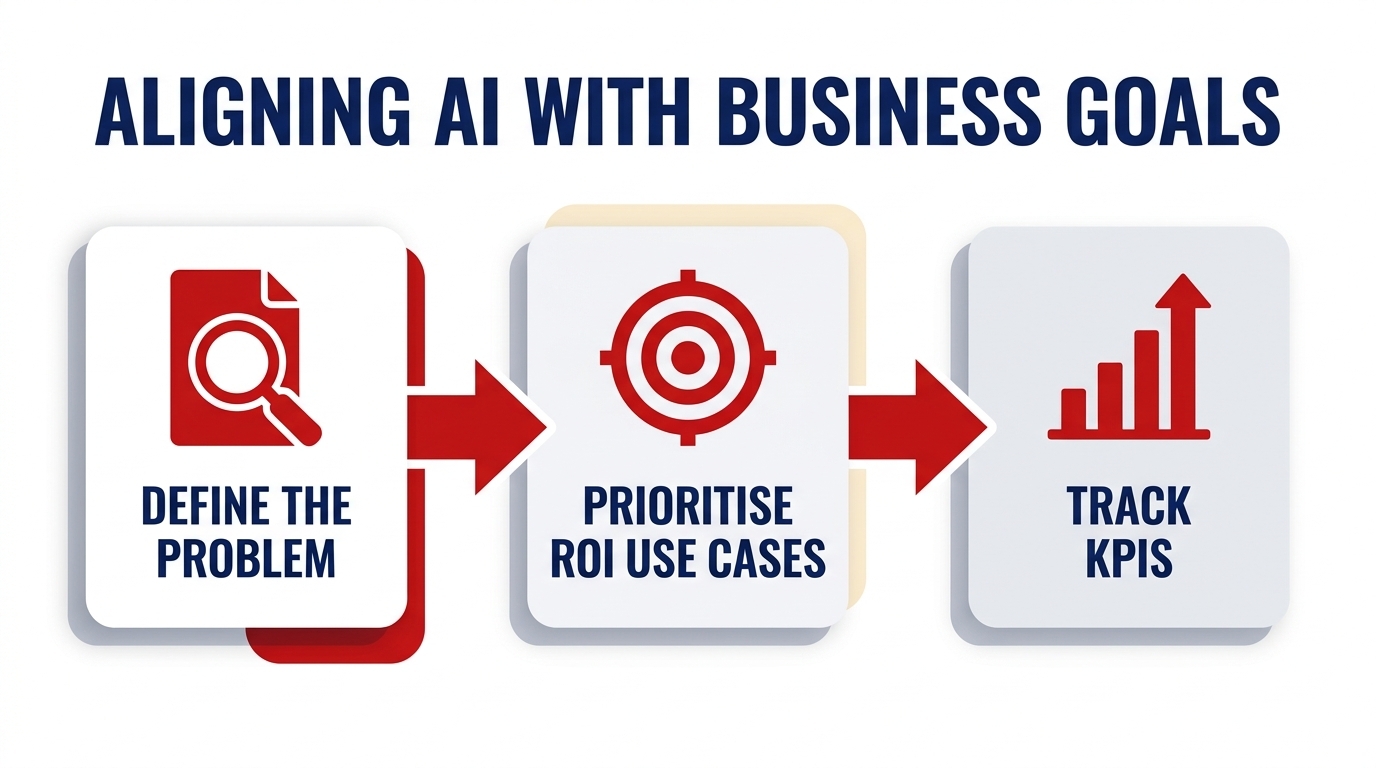
The cornerstone of every successful enterprise AI initiative is establishing clear connections between AI solutions and specific business objectives. Without this critical alignment, projects risk becoming isolated technological exercises that fail to deliver meaningful organisational value.
Define Business Challenges and Objectives
Successful AI initiatives begin with clearly identifying and prioritising high-impact business challenges that AI can effectively address. These typically fall within several categories:
- Operational inefficiencies: Areas where manual processes create bottlenecks
- Customer experience gaps: Opportunities to enhance satisfaction and loyalty
- Data-driven optimisation: Potential for improved analytics-based decision making
UK Example: Marks & Spencer Food chose RELEX Solutions for AI-driven forecasting, ordering and allocation across its food business. The goal is a specific operational one: better product availability and less waste, particularly in fresh and chilled ranges where both problems cost the most.
Focus on Use Cases with Clear ROI Potential
AI's versatility allows for application across numerous business domains, but successful enterprises prioritise use cases with demonstrable return on investment potential. Evaluate potential AI applications based on:
- Technical feasibility: Realistic assessment of implementation complexity
- Data readiness: Availability of sufficient quality data to train models
- Business impact: Potential effect on revenue, efficiency, or customer satisfaction
- Implementation timeframe: Balance between quick wins and strategic initiatives
High-Value UK Enterprise AI Applications:
| Industry | AI Application | Business Impact |
|---|---|---|
| Retail | Demand forecasting | Leaner inventory and fewer stock-outs |
| Financial Services | Fraud detection | Faster identification of suspicious transactions |
| Manufacturing | Predictive maintenance | Less unplanned downtime |
| Healthcare | Diagnostic assistance | Earlier detection of issues |
Establish and Track Meaningful KPIs
Measuring the success of an AI deployment requires establishing clearly defined Key Performance Indicators (KPIs) that link directly to business outcomes. Effective AI performance metrics typically include:
- Financial metrics: Cost reductions, revenue growth, margin improvements
- Operational metrics: Productivity increases, error reduction, improved uptime
- Customer experience metrics: Net Promoter Score improvements, reduced churn
- Employee metrics: Satisfaction improvements, reduction in routine tasks
In Practice: Personalised customer offers are a common first use case because conversion, retention and average revenue per customer are usually tracked already, so the before and after is easy to prove. Across industries, McKinsey finds personalisation most often drives a 10 to 15 percent revenue lift.
With clear goals and metrics established, creating an organisational environment that supports effective AI adoption becomes the next critical priority.
Managing Organisational Change for AI Success
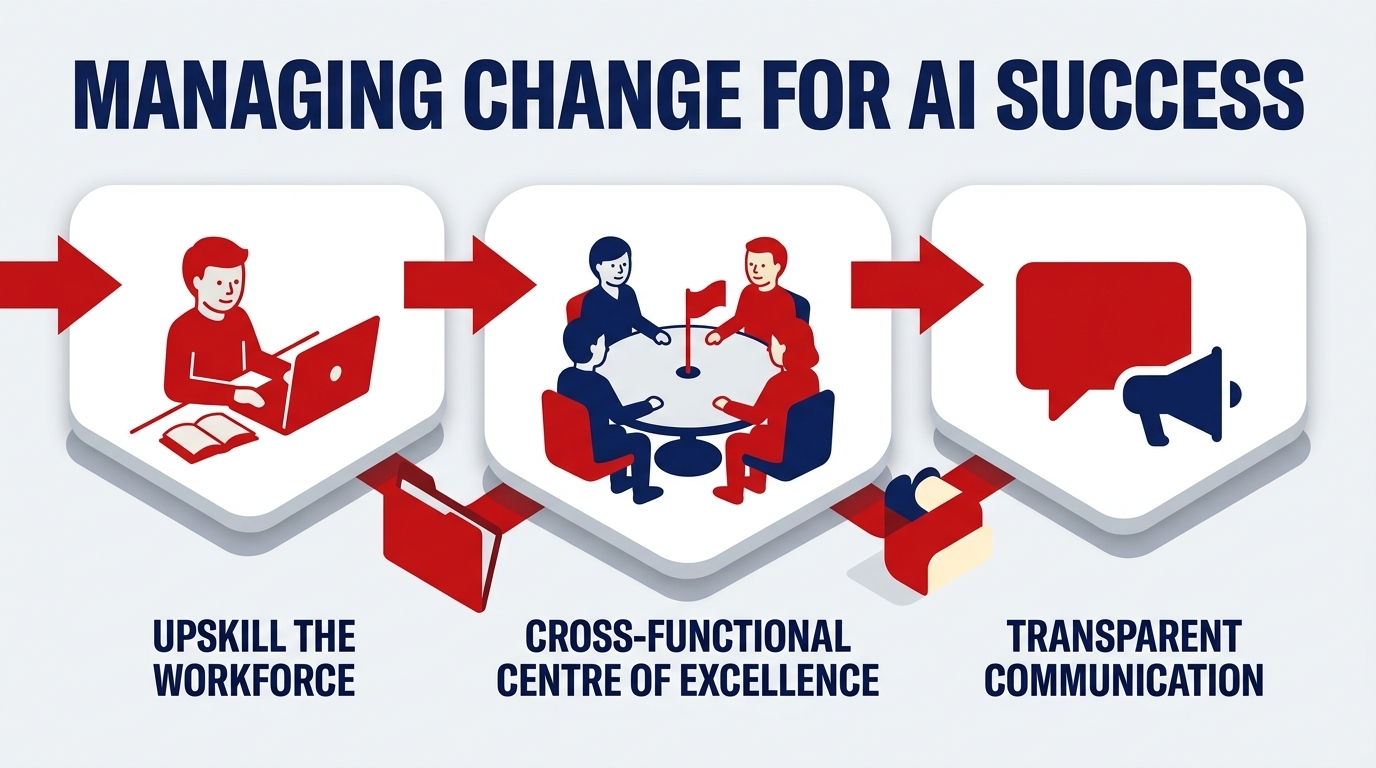
The value of enterprise AI is largely determined by how effectively an organisation adapts its culture, structure, and processes. Beyond the underlying technology, successful AI implementation requires comprehensive transformation across the entire organisation.
Upskill the Workforce
AI deployment creates new skill requirements across the organisation. A strategic approach to workforce development includes:
- Technical training: Develop specialised expertise in AI/ML engineering, data science, and model operations among technical teams
- General AI literacy: Build basic understanding of AI capabilities, limitations and applications across the broader workforce
- Leadership development: Ensure executives understand AI's strategic implications and can make informed investment decisions
UK Example: BT's TechWomen programme is a year-long development programme that equips women to move into senior technology roles. It shows how structured upskilling can build technical capability and tackle the gender imbalance in technical teams at the same time.
Drive Cross-Departmental Collaboration
AI projects thrive in environments that bridge traditional organisational silos. Effective approaches include:
- Cross-functional teams: Form dedicated units with representation from data science, IT operations, and relevant business departments
- Embedded expertise: Place AI specialists directly within business units to ensure solutions address practical needs
- Centres of excellence: Establish central AI hubs that coordinate enterprise-wide initiatives while sharing best practices
UK Example: Nationwide Building Society set up an AI Centre of Expertise with IBM Consulting to oversee its AI work, alongside an AI Council that checks applications against responsible AI principles. One central team sets the standards while business functions bring the use cases.
Communicate the Vision Transparently
Uncertainty about AI's implications (particularly regarding job security) can create resistance to adoption. Clear, consistent communication builds trust and enthusiasm rather than apprehension:
- Emphasise augmentation: Highlight how AI empowers employees to focus on higher-value work rather than simply automating jobs away
- Share success stories: Regularly communicate wins and lessons learned from AI initiatives
- Address concerns directly: Create forums where employees can ask questions about AI's impact on their roles
With organisational readiness established, addressing technical implementation challenges becomes the next priority for successful enterprise AI deployment.
Overcoming Common AI Implementation Challenges
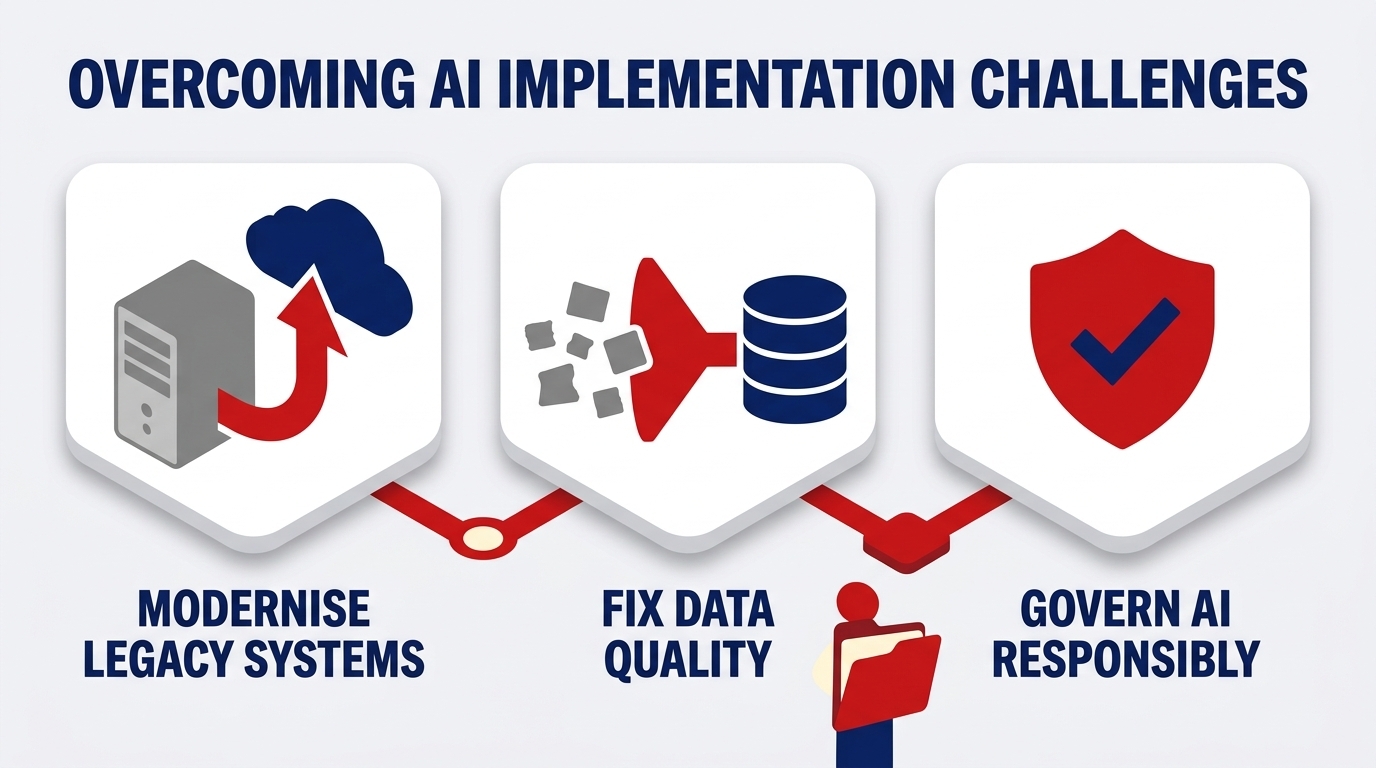
Technical barriers frequently impede AI adoption in UK enterprises, with legacy infrastructure and poor data quality among the most common obstacles. The stakes are high: Gartner estimates poor data quality costs organisations at least $12.9 million per year. Effective strategies to overcome these challenges include:
Modernise Legacy Infrastructure
Outdated systems often resist integration with modern AI capabilities, making strategic infrastructure modernisation essential:
- Cloud migration: Transition appropriate workloads to cloud platforms that offer native AI/ML capabilities
- API-first architecture: Implement interfaces that enable AI services to connect with existing systems
- Containerisation: Use technologies like Kubernetes to create scalable, portable AI applications
- Hybrid approaches: Develop transitional architectures that bridge legacy and modern systems during migration
Implementation Example: Lloyds Banking Group moved 15 modelling systems, comprising hundreds of individual models, from its own servers to Google Cloud's Vertex AI platform. The group also reports an algorithm that cuts the income verification step in mortgage applications from days to seconds.
Ensure Data Quality and Accessibility
AI systems perform only as well as the data they're trained on. Improving data readiness requires:
- Data governance frameworks: Establish clear policies for data quality, access and usage
- Master data management: Create consistent definitions and formats across systems
- Real-time data pipelines: Implement streaming architectures for time-sensitive AI applications
- Data lakes/warehouses: Consolidate information from disparate sources into unified repositories
Best Practice: NHS England's data quality framework for providers treats timely, complete and accurately coded data as the foundation of good care. Those same qualities are prerequisites for clinical AI, where reliability has to be extremely high.
Address Ethical Considerations in AI
Responsible AI governance is increasingly critical for regulatory compliance and stakeholder trust. Effective approaches include:
- Ethical review processes: Establish committees to evaluate potential AI applications for fairness and societal impact
- Explainability requirements: Ensure AI systems can provide understandable rationales for their decisions
- Bias detection and mitigation: Implement tools to identify and address algorithmic biases
- Regulatory compliance: Align AI governance with UK GDPR, ICO guidance on AI and data protection, and the UK government's principles-based approach to AI regulation
UK Example: NatWest Group runs every AI use case through an Ethical AI Impact Assessment and sends high-risk cases to its AI and Data Ethics Panel for formal review. It is a practical way to balance innovation with responsibility in customer-facing financial services.
Measuring ROI from AI Deployments
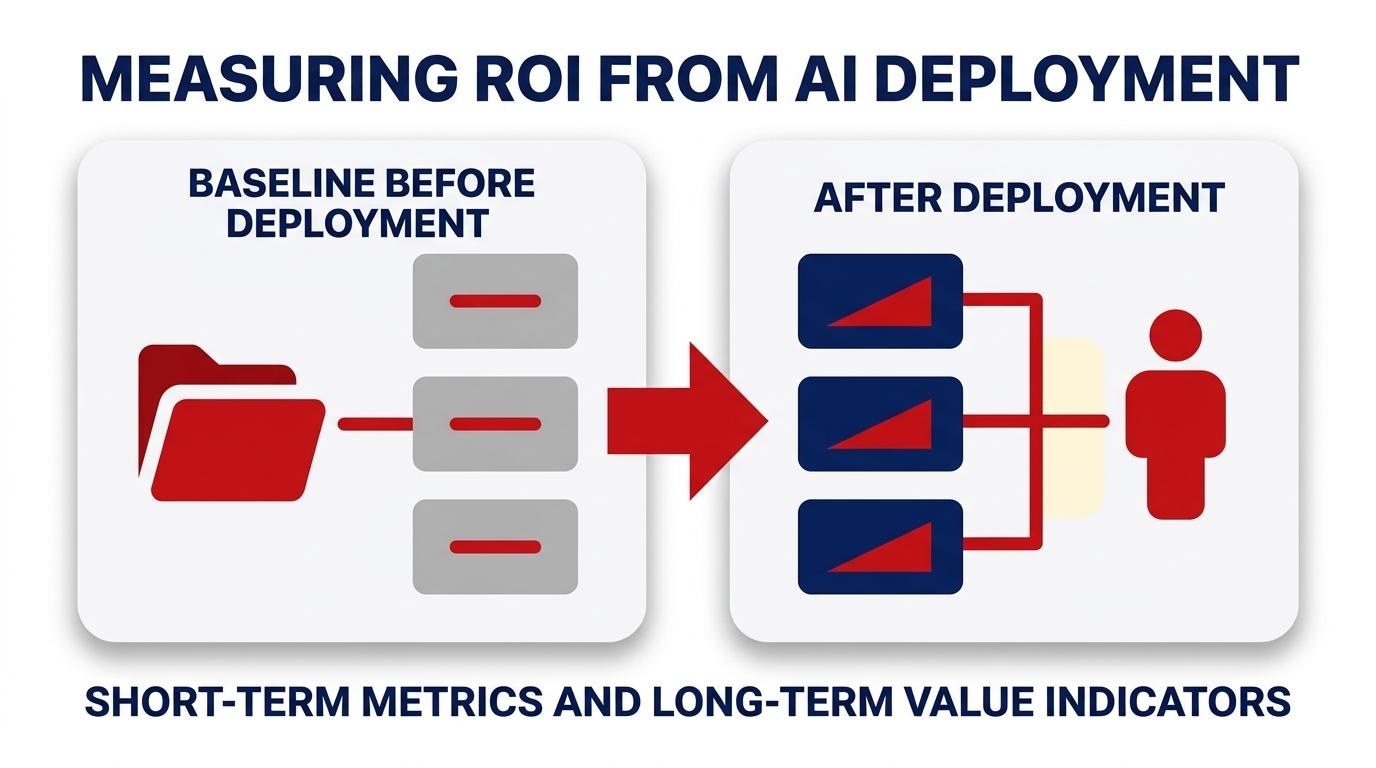
Demonstrating the business value of AI investments requires connecting technical metrics to tangible business outcomes. Effective measurement approaches include:
Establish Baseline Metrics Before Implementation
Document current performance levels in target areas before AI deployment to enable accurate comparison:
- Process efficiency baselines: Measure current throughput, cycle times, and error rates
- Cost benchmarks: Document existing operational expenses in target processes
- Customer satisfaction metrics: Capture pre-implementation NPS or satisfaction scores
- Employee productivity measures: Record current output and time allocation patterns
Track Both Short-Term and Long-Term Metrics
Monitor immediate operational improvements while also measuring strategic business impact:
Short-Term Metrics
- Reduced processing times
- Decreased error rates
- Improved throughput
- Initial cost savings
Long-Term Value Indicators
- Customer retention improvements
- Market share gains
- New revenue streams enabled by AI
- Sustained competitive advantage
Measurement Framework Example:
| Business Objective | AI Application | Short-Term Metric | Long-Term Value Indicator |
|---|---|---|---|
| Operational Efficiency | Automated document processing | Reduction in processing time | Reallocation of staff to high-value activities |
| Customer Experience | Personalised recommendations | Increase in conversion rate | Improvement in customer lifetime value |
| Risk Management | Fraud detection | Faster identification of suspicious activity | Reduction in annual fraud losses |
Communicate AI Value in Business Terms
Translate technical achievements into language that resonates with executives and stakeholders:
- Financial impact: Quantify cost savings, revenue increases, or efficiency gains in monetary terms
- Strategic alignment: Connect AI outcomes to broader business objectives and KPIs
- Competitive benchmarking: Compare performance against industry standards and competitors
- Future potential: Articulate opportunities for scaling successful AI applications
In Practice: Instead of reporting model accuracy, report what changed for the business: orders processed per hour, errors caught before they reached a customer, or hours handed back to the team each week.
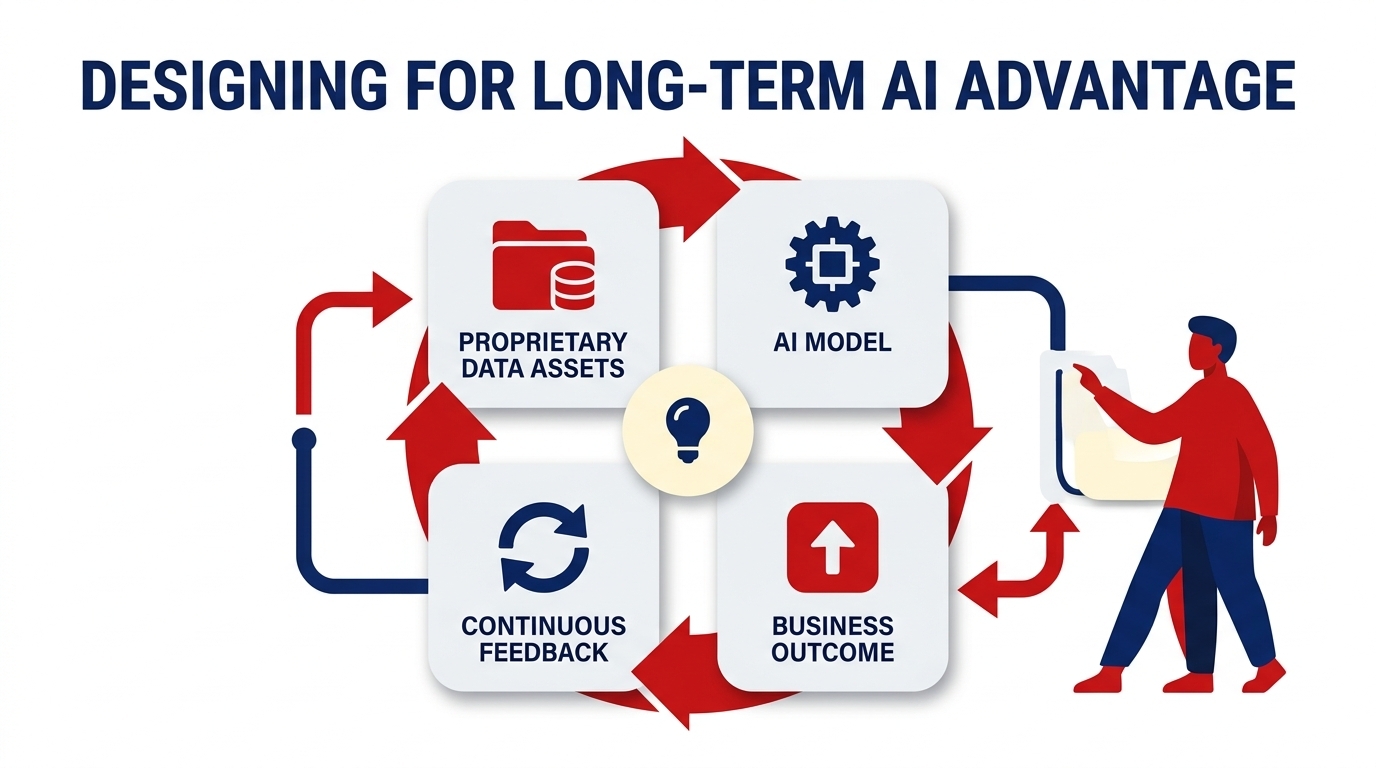
Designing AI for Long-Term Competitive Advantage
Building sustainable AI capabilities requires thinking beyond initial implementations to create lasting organisational advantages:
Develop Proprietary Data Assets
Create unique data resources that competitors cannot easily replicate:
- Custom training datasets: Develop specialised information resources tailored to your industry context
- Feedback loops: Design systems that continuously improve through operational data capture
- Data partnerships: Form strategic alliances that provide exclusive access to valuable information
- Synthetic data capabilities: Build capacity to generate artificial training data where real data is limited
Conclusion
Enterprise AI deployment succeeds or stalls on the same few foundations: a defined business problem, data you can trust, people who are ready for the change, governance that holds up to scrutiny, and a baseline to measure against. The technology is rarely the hard part.
UK businesses that start with one well-chosen use case, prove its value in business terms and then scale what works will build an advantage that is difficult to copy, because it rests on their own data and their own ways of working.
Frequently Asked Questions
What is an enterprise AI deployment strategy?
An enterprise AI deployment strategy is a structured plan for rolling out artificial intelligence across a business so it supports clear commercial goals. It covers which problems AI will address, the data and infrastructure required, governance and ethics, workforce skills, and how results are measured, rather than adopting tools in isolation.
How does enterprise AI deployment work in practice?
Enterprise AI deployment usually works in stages. You define a high-value business problem, confirm the data is ready, then build or buy a model and integrate it with existing systems. Teams pilot on a narrow use case, measure outcomes, refine, and scale gradually while keeping governance and human oversight in place.
What are the main benefits of a clear AI deployment strategy?
The main benefit of a clear AI deployment strategy is that AI effort maps to measurable business value instead of scattered experiments. Done well, it improves operational efficiency, sharpens decision-making, frees staff from repetitive tasks, and reduces risk through proper governance. It also builds internal skills that compound as further use cases follow.
How much does enterprise AI deployment cost and how long does it take?
Cost and time for enterprise AI deployment vary widely with scope, data maturity, and whether you build or buy. A focused pilot on one use case can show results within a few months, while an enterprise-wide rollout takes longer. Budget for data preparation, integration, skills, and ongoing governance, not just the model itself.
Should UK businesses build or buy their enterprise AI?
Building enterprise AI gives you control and a proprietary advantage but demands scarce skills, time, and maintenance. Buying an established platform is faster and lower-risk for common needs, though it offers less differentiation. Many UK businesses combine both: buy for standard capabilities and build where unique data or processes create genuine competitive advantage.
Who is enterprise AI deployment best suited to?
Enterprise AI deployment suits organisations with a clear high-value problem, reasonable data quality, and leadership willing to fund change management. It fits businesses handling large volumes of repetitive decisions or data, such as retail, financial services, manufacturing, and healthcare. Firms without clean data or defined objectives should address those foundations first.
What is the most common mistake in enterprise AI deployment?
The most common mistake in enterprise AI deployment is starting with the technology rather than a defined business problem. Projects launched without clear objectives, ready data, or governance become isolated experiments that stall. Poor data quality, weak change management, and no measurement plan are the usual reasons pilots fail to scale.
What single metric should I track for enterprise AI?
The single most useful metric to track is return on investment tied to the original business objective, such as cost saved, revenue gained, or time reclaimed against a documented baseline. Measuring against a pre-deployment baseline shows whether enterprise AI delivers real value and keeps stakeholders supportive as you scale further use cases.
Final word: start with the problem, not the platform
Enterprise AI pays back when it is pointed at a defined business problem, runs on data you trust and is measured against a baseline. The AI Enhancement Audit shows where AI would deliver value first across your CRM and automation, which data and rules need fixing before anything is connected, and returns a prioritised plan you can act on with or without us.
Book a discovery callSources
- Gartner: 40% of enterprise apps will feature task-specific AI agents by 2026
- Gartner: Data quality
- McKinsey: The value of getting personalization right, or wrong, is multiplying
- RELEX Solutions: M&S Food selects RELEX
- BT Newsroom: TechWomen, closing the gap in tech
- FinTech Magazine: Nationwide AI Centre of Expertise
- Lloyds Banking Group: Accelerating AI innovation with Google Cloud
- NHS England Digital: Data quality framework for providers
- NatWest Group: Upholding ethical use of AI and data management